
The Volvo S60 is a compact executive sedan produced by the Swedish automaker Volvo from 2000. Two generations of the sedan have been produced to date. The S60 marked a clean break for Volvo from the boxy design that many associated the brand with in the 1980s and 90s. Its design, done by a design team led by Peter Horbury, built upon the styling of the S80 and was the most marked departure from traditional Volvo styling since Horbury joined the firm in 1992. Accordingly, Volvo marketed the car as heralding a “Revolvolution.” The S60 was built upon Volvo’s P2 platform, which was shared with other Volvo models like the S80, V70, XC70 and finally the XC90. The S60 was refreshed in 2005. The exterior was updated with body-colored side moldings and bumpers, as well as new headlamps. The interior received some updates as well, with new seats, trim, and an updated center console. The Four-C chassis from the S60 R became an option on some S60s. The T5 engine was also reengineered from 2.3 to 2.4 litres and received an increase of 10 bhp (7 kW; 10 PS). Police specification models came about through Volvo’s extensive work alongside the users of the vehicles and Police Fleet Management departments. As a result the Police specification vehicles have a striking difference from original showroom model. Firstly the suspension was up-rated to deal the demands of Police work; this included fitting the front suspension of the D5 model variant (as the suspension was designed to deal with the heavier diesel engine). Nivomat self-levelling suspension was also fitted to the rear to ensure correct geometry of the vehicle, regardless of the weight carried. On early models, the clutch was also replaced with the stronger D5 unit. A larger specification battery and 110A alternator was also fitted to run all the extra equipment, along with a dedicated Police fuse box in the boot. Extra wiring looms are also fitted specially for the Police radios and other equipment, including CCTV cameras. Additional electrical noise suppression has been added so as not to interfere with the sensitive electronics the police use. The speedometers in the vehicles are calibrated from the factory and do not require recalibration unless the wheel and overall rolling diameters are changed. 305 mm (12.0 in) vented front disc brakes were also fitted alongside special brake pads (and wear indicators) specially designed to cope with high-speed pursuits. During 2001–2004 the 2.3 litre T5 engine was used and in 2005-2009 the 2.4 litre T5 engine was used. Also beyond common speculation and myths, the engines are not chipped or modified specially for police use: they are complete factory spec but in 'exceptional cases' the speed limiter (250 km/h) may have been removed.


First introduced in 2003, Volvo's S60 R boasted Haldex AWD mated to a 300 PS (221 kW; 296 hp) / 400 N·m (300 ft·lbf) inline-5. The 2004–2005 models came with a 6-speed manual transmission, or an available 5-speed automatic which allowed only 258 lb·ft (350 N·m) torque in 1st and 2nd gears. The 2006–2007 models came with a 6-speed manual or 6-speed automatic transmission. The new 6-speed automatic transmission allowed the full torque of 295 lb·ft (400 N·m) in all gears. Other aspects which set the R apart from standard S60s were the large Brembo front and rear four-piston brakes, fully forged engine internals, optional 18" 5 spoke "Pegasus" wheels, blue faced "R" gauges, standard HID headlights, as well as the Four-C suspension system. Four-C (a short name for "Continuously Controlled Chassis Concept") allows the user to select from three modes: Comfort, Sport, and Advanced. "Comfort" attempts to soften the car over bumps, while "Advanced" firms the suspension considerably and gives more aggressive throttle response - a setting Volvo implies is for use on the race track. This is accomplished through a drive by wire throttle, allowing the same pedal travel to result in different performance when the appropriate mode is selected, electronically-controlled shock absorbers that can adjust themselves 500 times a second, and a complex series of sensors throughout the body of the vehicle. Volvo collaborated with high-tech system developer Ohlins Racing AB and shock absorber manufacturer Monroe for the self-adjusting shock absorbers. The S60 R continued the tradition of "R" cars for Volvo beginning in 1995 with the introduction of the 850 T-5 R. Top Gear reviewed the car in episode 9 of series 2. They panned the overly complicated and intrusive traction control system, and it set a slow lap time of 1:35.0. But they also found it to be very comfortable and civilized, and especially recommended the estate version. Jeremy Clarkson noted "More like a miniature version of the Rolls-Royce Phantom than a serious competitor to the BMW M3. In 2006, At Speed Motorsports entered an all-wheel-drive S60R in five races of the SCCA Pro Racing World Challenge GT class. It was driven by Michael Galati and finished 14th in the overall standings, including a win at Mosport. Since 2009, K-PAX Racing has fielded two S60s the GT class, with former champions Andy Pilgrim and Randy Pobst as drivers. In 2010, Randy Pobst won the GT driver's championship while securing the GT manufacturer's championship for Volvo. For the 2011 season, K-PAX will debut new S60s using the second generation body style at Miller Motorsports Park. Joining defending GT driver's champion Randy Pobst will be new team mate Alex Figge. For some years the S60 was the car of the factory Volvo team in the Swedish Touring Car Championship, where it finished 2nd in the drivers' championship twice and won the manufacturers' title once.

The second generation S60 began production in Ghent, Belgium on May 17, 2010, with an expected annual production of 90,000 vehicles. Official photos were released in November 2009, and the car was publicly unveiled at the Geneva Motor Show in March 2010. It debuted as a 2011 model in North America. This new sedan will show off Volvo's completely new design language already seen in the Volvo XC60 concept. It will ride on the same platform as the XC60. Volvo has confirmed that the new S60 will become the true new rival for the Mercedes C-Class, Audi A4 and the BMW 3-series, as Volvo is undergoing new product alignment. This new design is though to target younger demographics. Even so, Volvo hopes to keep its high-income customer appeal; from the first generation, a Volvo S60 buyer has had a higher household income than a BMW 3-series customer. New features include the new large Volvo iron symbol, parallel to the grille day running lamps, and larger spaced letters in the brand name on rear. A new safety feature, Pedestrian Detection, will be added to automatically apply brakes if a pedestrian is detected in front of the car and the driver does not react in time. In 2008, Volvo Cars announced the Volvo S60 Concept, which features a four-cylinder 1.6L petrol engine using highly-efficient Gasoline Turbocharged Direct Injection (GTDi) developed by Ford (a mechanical clone of the new Ford EcoBoost 1.6L engine). The concept car was exhibited in several automobile shows in 2009, and SimBin has released a free game based on the GTR game engine that includes the S60 Concept. Engines:
T3: 110 kW (150 PS; 148 hp) , 240 N·m (180 lb·ft) , 4-cyl, 1.6 litre, petrol, turbo (2011 - )
T4: 132 kW (179 PS; 177 hp) , 240 N·m (180 lb·ft) , 4-cyl, 1.6 litre, petrol, turbo (2011 - )
2.0T: 149 kW (203 PS; 200 hp) , 300 N·m (220 lb·ft) , 4-cyl, 2.0 litre, petrol, turbo (2010 - )
T5: 180 kW (245 PS; 241 hp) , 320 N·m (240 lb·ft) , 4-cyl, 2.0 litre, petrol, turbo (2011 - )
T5 (US): 186.5 kW (254 PS; 250 hp) , 360 N·m (266 lb·ft) , 5-cyl, 2.5 litre, petrol, turbo (2011 - )
T6: 224 kW (305 PS; 300 hp) , 440 N·m (320 lb·ft) , 6-cyl, 3.0 litre, petrol, turbo (2010 - )
1.6D DRIVe: 85 kW (116 PS; 114 hp) , 270 N·m (200 lb·ft) , 4-cyl, 1.6 litre, diesel, turbo (2011 - )
D3: 120 kW (163 PS; 161 hp) , 400 N·m (300 lb·ft) , 5-cyl, 2.0 litre, diesel, turbo (2010 - )
D5: 151 kW (205 PS; 202 hp) , 420 N·m (310 lb·ft) , 5-cyl, 2.4 litre, diesel, turbo (2010 - )


 Amazing Volvo XC60 Crossover With Glossy Silver
 Golden Volvo XC60 Crossover On Parking Area
 Volvo XC60 Crossover Machine
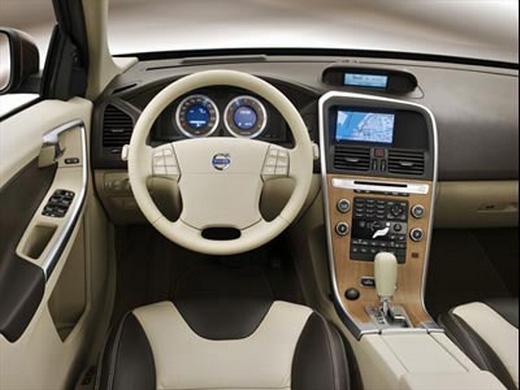 Volvo XC60 Crossover Gorgeous Interior
 Luxury White Diamond Volvo XC60 Crossover
 Volvo XC60 Crossover Seats View
 Volvo XC60 Crossover Hatchback


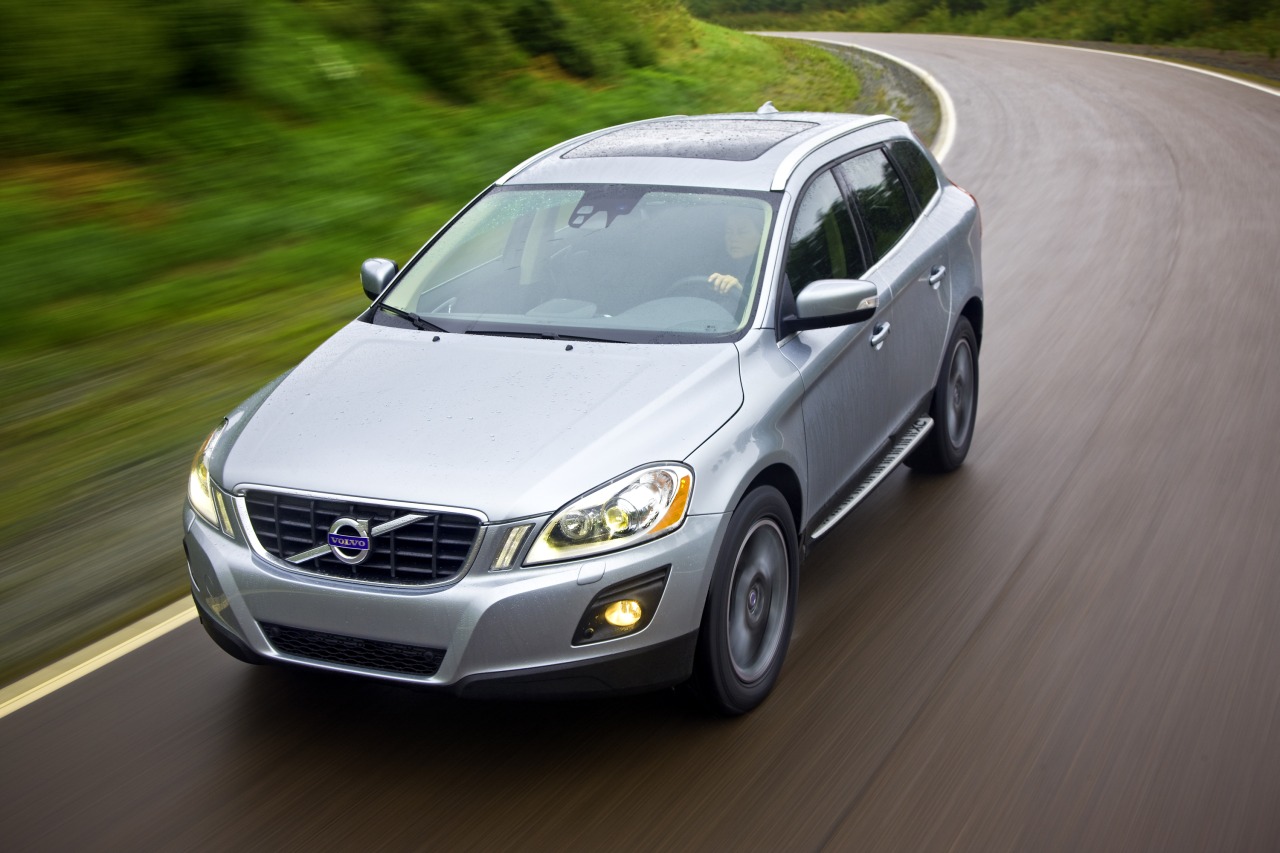


 The featuring of exclusive Volvo S60 have strong hint of its siblings Volvo SC60. The strong resemblance lies in the front view and roofline of the car.


